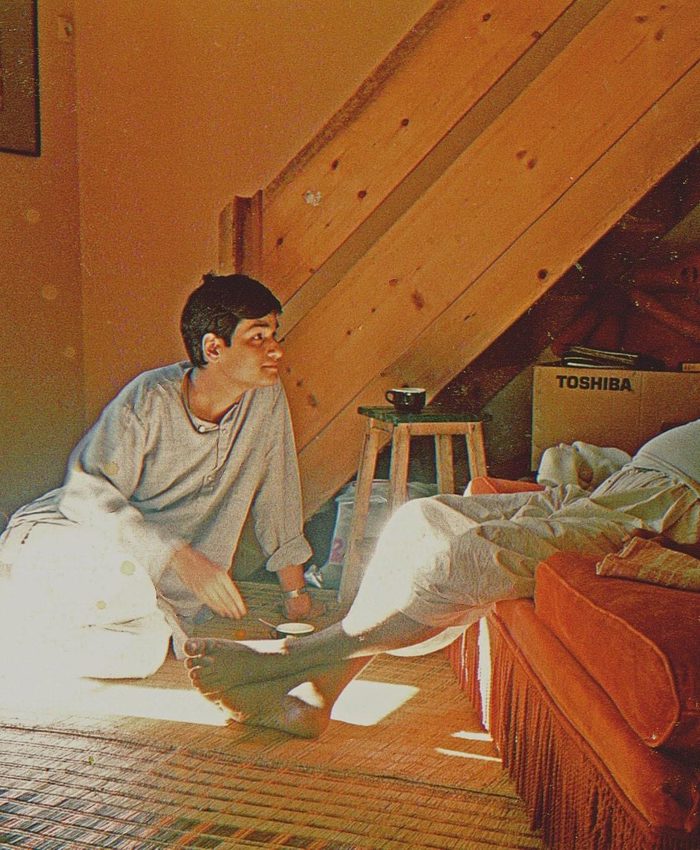
Ustad Zia Mohiuddin Dagar
Rudra Veena · 1929–1990
Known to his students as Bade Ustad, he taught at his gurukul near Panvel, where Dhrupad was passed on entirely in the guru-shishya way.
 Contemporary space for ancient traditions
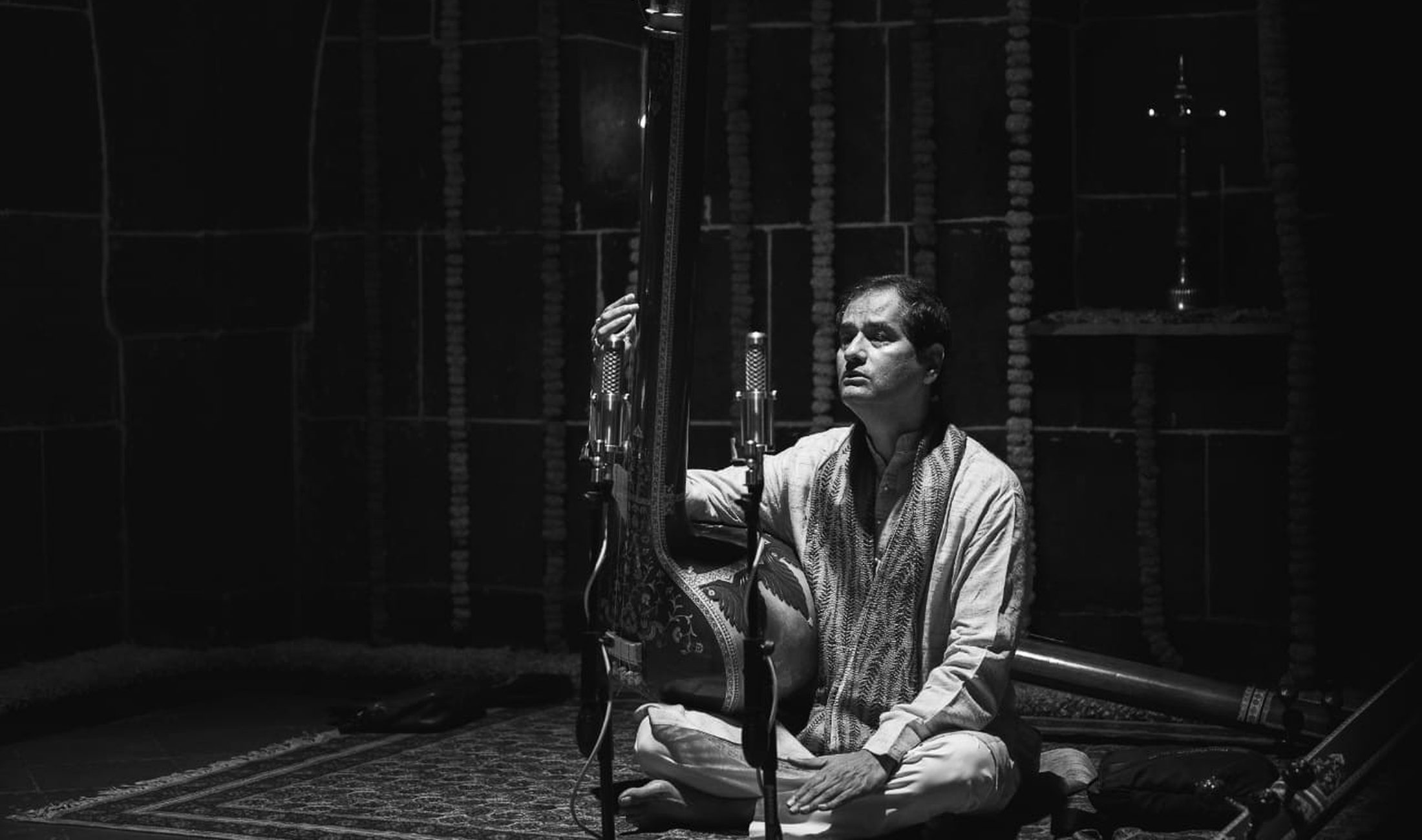
For one evening, the oldest surviving form of Hindustani classical music comes to a living room in Chevy Chase — sung, unamplified, by one of its greatest living masters. What follows is a three-day immersion for those who wish to step inside the tradition.
The Evening
Dhrupad offers more than a captivating performance — it is a portal to a profound inner world. This millennia-old art form weaves a tapestry of serenity, contemplation, and ecstasy, and each meticulously crafted note is an invitation to sit still and explore the depths of your own being.
On July 5th, Pandit Uday Bhawalkar performs an intimate recital, accompanied by Sri Pratap Awad on the pakhawaj — the double-headed, barrel-shaped drum that has partnered Dhrupad for centuries — and his senior disciple Sri Kirit Singh. Close your eyes, and let an ancient raga carry you somewhere quiet.
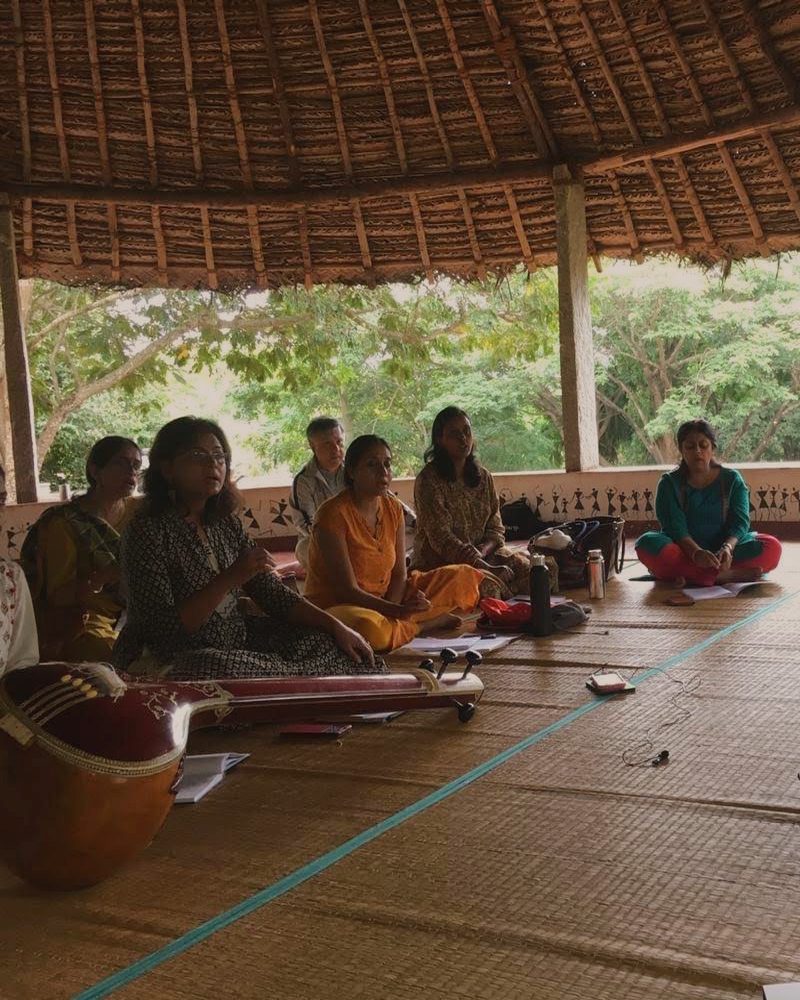
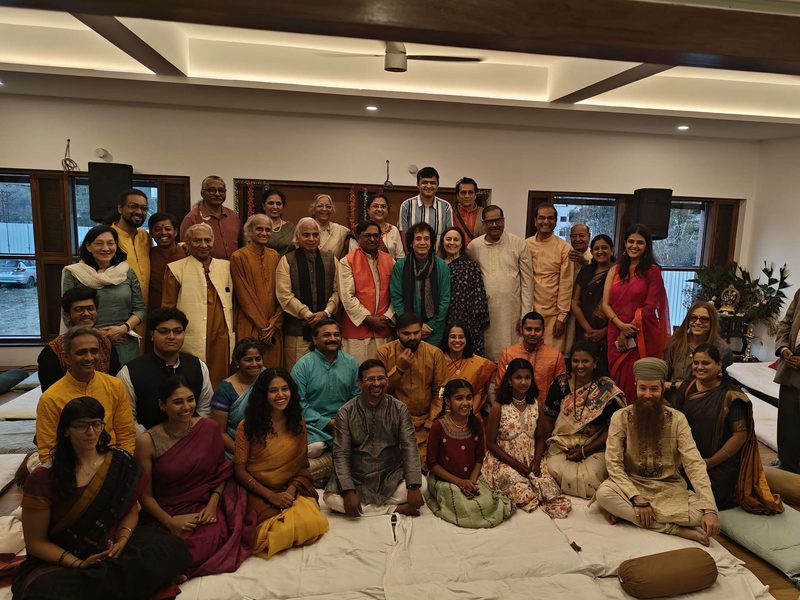
For those who wish to go further, the recital opens a three-day workshop (July 6–8). Step by step, and with no prior experience required, you will learn the core elements of the Dhrupad sound — voice, syllables, tonal modulation, breath, and the traditional approach to unfolding a raga — until, by the end, you have sung a full raga yourself.
“When immersed in the note and the raga, the self disappears and the music takes on its own existence — the principle of darshan in Indian philosophy.”
Pandit Uday Bhawalkar
The Artist
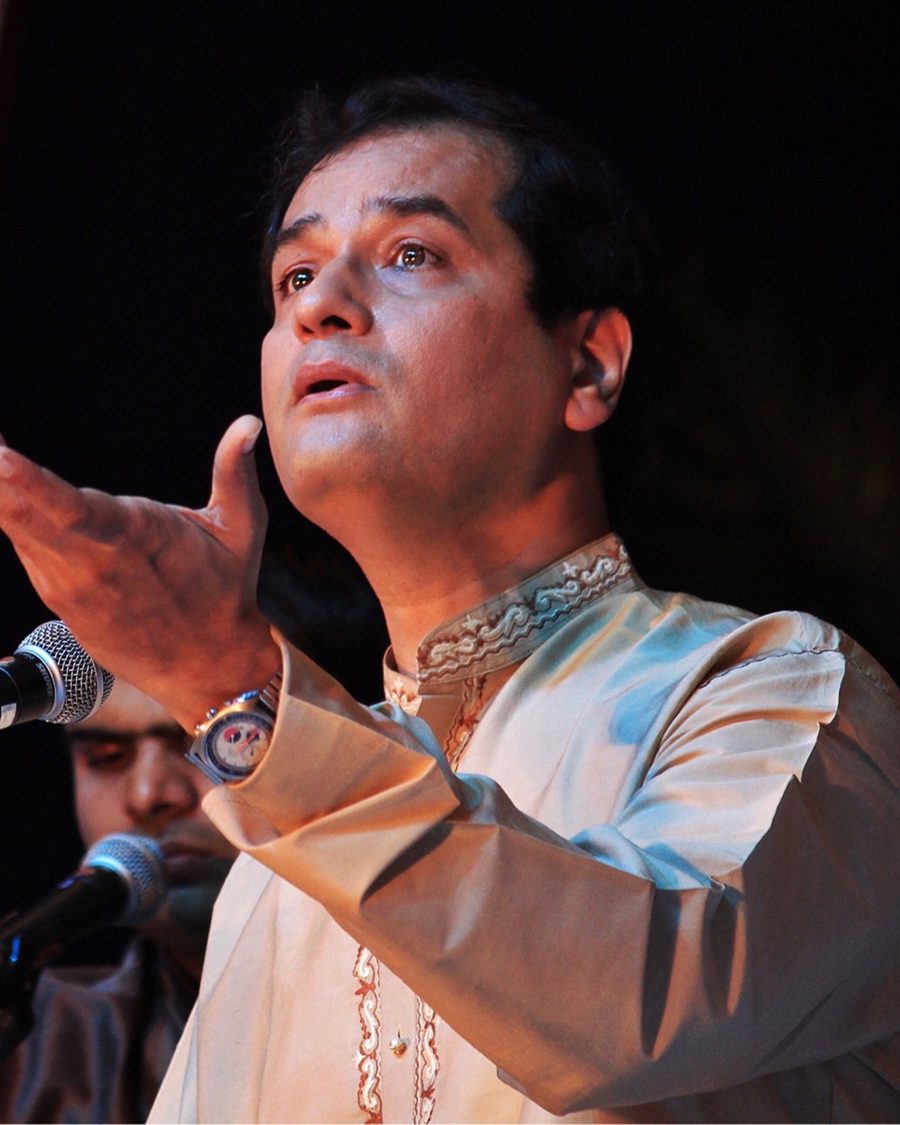
Born in Ujjain in 1966, Pandit Uday Bhawalkar is among the foremost Dhrupad vocalists in the world, and a central force in the tradition’s resurgence over the past four decades. He spent more than twelve years in the traditional guru-shishya parampara — living and learning with his gurus — and gave his debut performance in Bhopal in 1985.
Since then he has performed across Europe, the United States, the United Kingdom, Canada, Mexico, Israel, Japan, Morocco, Singapore, Nepal and Bangladesh. He has collaborated with the contemporary dancer Astad Deboo and Germany’s Ensemble Modern, shared the stage with tabla maestro Zakir Hussain, and lent his voice to films by Mani Kaul (Cloud Door), Aparna Sen (Mr & Mrs Iyer) and Amol Palekar (Anahat).
Since 2012 he has been a guru at the ITC Sangeet Research Academy in Kolkata and at the Bengal Foundation’s Parampara Sangeetalay in Dhaka, and has taught at the Rotterdam Conservatory and the University of Washington, Seattle.
Uday Bhawalkar sings in the Dagarvani — the meditative, leisurely style of the Dagar lineage, the family that has preserved the pure form of Dhrupad across some twenty generations. He learned it, over more than a decade, directly from two of its towering masters.
Rudra Veena · 1929–1990
Known to his students as Bade Ustad, he taught at his gurukul near Panvel, where Dhrupad was passed on entirely in the guru-shishya way.
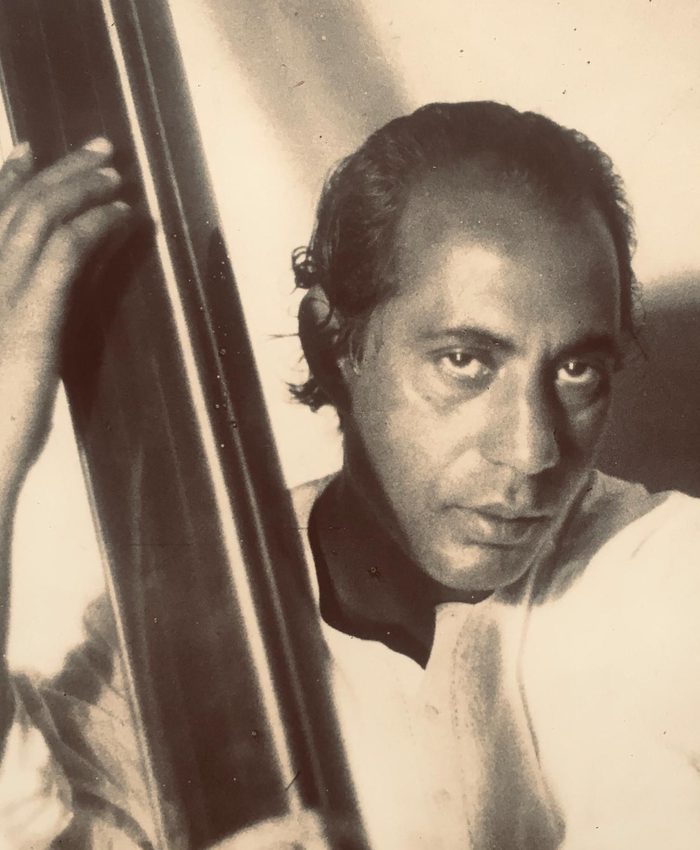
Vocal · b. 1932
A nineteenth-generation bearer of the Dagarbani and founding director of the Dhrupad Kendra, Bhopal, where a generation of today’s leading Dhrupad singers were formed.
Udayji's Gurukul
“Dhrupad is a way of life.”
Off the stage, Uday Bhawalkar’s life’s work is the Swarkul Foundation — a residential gurukul in Bavdhan, Pune, where fully dedicated students come to live, practise, and become Dhrupad musicians. It continues the Veena Foundation he began in 2001, and took its present form in 2019.
There are no semesters and no classrooms. Teaching happens in the old way — the guru-shishya parampara — which the foundation describes as “a soulful wisdom transmission leading to a deep transformation of the artistic spirit within the disciple.” Students absorb not only music but the philosophy embedded in the life the guru lives. Scholarships support gifted students who could not otherwise attend, and each year baithaks and workshops bring legendary artists to share their music and their stories.
Dhrupad is the oldest surviving form of Indian classical music. Its roots run back to Samagana — the chanting of the Sama Veda — and its name joins dhruva (constant, structured) with pada (word). Born in temple and court, refined under Raja Man Singh of Gwalior some six centuries ago, it has been carried into the present by the Dagar family.
A Dhrupad recital unfolds slowly and without hurry: a long, meditative alaap that lets a raga reveal itself note by note, before the entrance of the pakhawaj and a composition set to rhythmic cycle. Through it all the raga is kept pure, and beneath the intricate rhythm runs a profound, unbroken sense of devotion.
The Inner Circle
Inner Circle is more than a concert series — it is a fellowship of listeners. Join to receive invitations to our intimate evenings, often before they are announced anywhere else.